Starting a modular buildings collection is one of the most rewarding decisions in the adult LEGO world — and one of the easiest to get wrong if you start with the wrong building at the wrong moment. This guide exists because the question “which one do I start with?” has a different answer depending on the month you ask it, and because half the people who ask it end up making the same expensive mistake: falling in love first with a building that is no longer on sale.
Minimum context for newcomers: the modulars are the line of minifigure-scale street buildings that LEGO has released since 2007, at a rate of roughly one building a year. Detailed facade, full interior, separable floors and a standard 32×32 base that lets them all connect to each other to form a street. We have the complete collection listed with its dates and prices, retired ones included; this guide is the decision layer on top of that list.
The mechanic that shapes everything: the line rotates
The first thing to take on board is not which building is the prettiest, but how the cycle works. When LEGO launches the new modular of the year, the oldest one still on sale usually gets a retirement date. And a retired modular is never re-released: it moves to the secondary market and its price starts drifting away from the official one with no way back. The Bookshop and the Police Station, retired at the end of 2023, already cost second-hand figures that anyone who saw them in a store would hardly believe.
This means that at any given moment there are buildings in three states: new arrivals with years ahead of them, veterans with the date looming, and retired ones that can now only be bought expensive. The whole collector strategy consists of not confusing them.
The snapshot right now (July 2026, from LEGO’s official list)
According to the daily sync of our database, the live line is four buildings, and they could not be at more different moments:
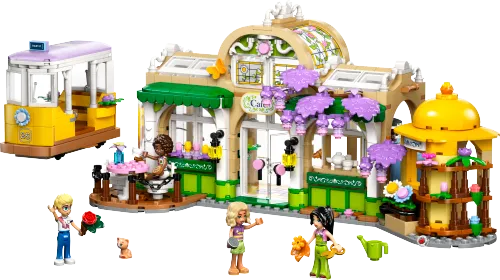
- French Café (10362) — 1,101 pieces, 79.99€ official price. It retires on 31 July 2026: weeks away. It is also the “small” modular — half the pieces and a third of the price of the big ones — which makes it the cheapest entry point the line has had in years… for a few more days.
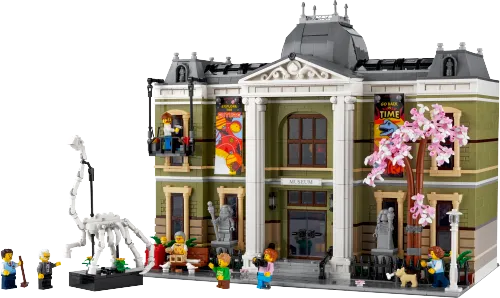
- Natural History Museum (10326) — 4,014 pieces, 299.99€. Retirement announced for 31 December 2026. The biggest and most ambitious one on sale today; its window is the Christmas season and no more. We look at it in depth in our Natural History Museum guide.
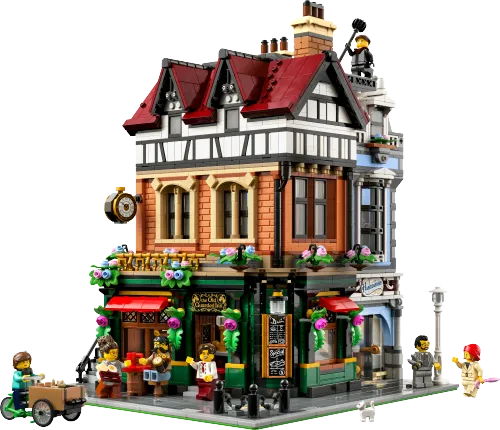
- Tudor Corner (10350) — 3,266 pieces, 229.99€, with a run until the end of 2028.
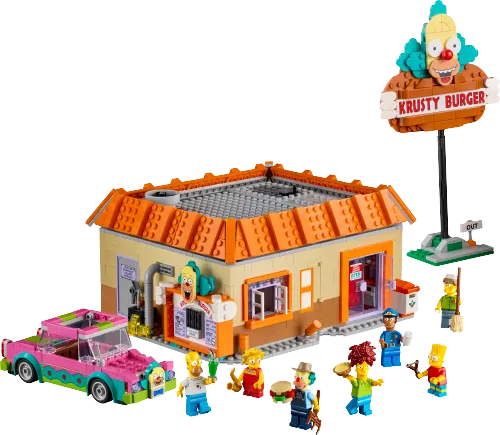
- The Simpsons Krusty Burger (10352) — 1,635 pieces, also until 2028. The most unusual one: half modular, half licensed set.
And a note that hurts: the Boutique Hotel and the Jazz Club left LEGO’s list in December 2025. If you had been eyeing them for a while, you are already too late for the official price — they are in the early secondary phase, which is the worst time to buy (the markup already exists and will still grow).
Which one to start with, depending on your case
If you want to try the line without committing (80€): the French Café, and this very week. It is the perfect test — full modular format at the price of a mid-size set — and its date will not wait for you to think it over. If you build it and it does not hook you, you have risked 80€; if it hooks you, you have just started the collection with the building that soon will not be available at the official price.
If you are serious from day one (300€): the Museum. It is the flagship of the current lineup, and its December retirement puts it in the same logic as the sets that will not make it to Epiphany: the sensible purchase is in the autumn at the latest, with Black Friday as the psychological deadline — after that you compete for leftover stock with the whole Christmas season.
If you would rather start without a clock: Tudor Corner. Until 2028 there is no urgency at all, it is a canonical modular (classic corner, three floors, absurd detail) and it leaves you room to catch it with a verified discount in deals instead of paying the official price out of impatience. It is the option we recommend to anyone who says “I don’t want to feel pressured”: the collection is more enjoyable without the feeling of being chased.
If the Simpsons rule in your house: the Krusty Burger is a great first purchase for that particular house — but be aware that it is the least representative modular of the line. If your plan is the classic European street, start with Tudor and leave Krusty as the second one.
The two mistakes that empty wallets
Mistake one: starting with resale. Getting into the collection by buying the retired Bookshop or Grand Emporium at secondary prices is starting the house with the most expensive roof. Retired ones can always come later, once you know the line is worth it for you; the live ones have an expiry date and the retired ones are not going to get cheaper. Absolute priority to what is still on sale — it is exactly the argument of our general guide on what to buy first, applied to its clearest case.
Mistake two: buying “to invest”. Yes, retired modulars go up. No, that does not make the purchase an investment — there are fees, time, the risk of spiritual re-releases and the awkward question of whether you are really going to sell. We have already written at length about the difference between investing in LEGO and playing with it; for this guide the short version is enough: buy the buildings you want to have on your street, in the order their retirement dates dictate. If one day they are worth more, that will be a pleasant anecdote, not the plan.
What about the ones I already missed?
The inevitable question from anyone starting in 2026: “so I will never have the Bookshop?”. Honest answer: probably not at a reasonable price, and that is fine. Three practical consolations. First, the line produces a new building every year — the collection always grows forward, and in five years your street will have five buildings that others will look at with the same envy with which you look at the Bookshop. Second, LEGO recycles concepts: it does not re-release modulars, but the themes come back (cafés, shops, offices), and the aesthetic gap left by a retired one is usually filled by a spiritual successor. Third, if a particular retired one truly obsesses you, the best moment on the secondary market is the worst emotional moment: years after the hype, when the price settles down — never in the months right after retirement, which is when everyone is looking for it. Patience or letting go; what does not work is the heat-of-the-moment purchase.
The habit that sustains the collection
One modular a year is the pace of the line itself, and it is a sustainable collecting pace: around 200-300€ a year, a building project of several evenings each time, and the street growing by one building per year. The only real work is watching the dates — knowing when the oldest building on sale gets its own so you do not say goodbye to it by accident. That is literally what this site does: the collection list updates itself from LEGO’s official list, and date changes appear in what’s new the day LEGO publishes them. With one look a month, the collection runs itself.