There is a conversation that repeats itself every 7 January: someone searched for “that LEGO set the kid wanted” on the 3rd, found it only from third-party sellers at double the price, and swears it was everywhere in the summer. Their memory is not deceiving them. It is the LEGO range’s retirement cycle working exactly as it works every year — and with the data in front of you it can be dodged entirely.
As of today (capture of 9 July 2026, from our daily tracking of the range), there are 479 sets with an official retirement date before 5 January 2027. Not spread evenly, but in two very specific waves:
- 125 sets retire on 31 July 2026. That is: in a matter of weeks. This wave is no longer a heads-up for Epiphany, it is a plain “now or never”.
- 351 sets retire on 31 December 2026. On paper they make it to New Year’s Eve; in practice — we explain why below — many do not even make it to the early-December long weekend.
The rest trickle out from August to November. The two big dates are no accident: LEGO clears out its range by half-year, and 31 July and 31 December are its two exit doors. Our system compares the range every night and publishes every movement — dates brought forward, sets that disappear without warning, official prices that change — on the what’s new page, which is where you should look if this guide goes out of date.
The small print of the retirement date
This is the most important thing in the whole guide: the retirement date is the end of production and of the official range, not a guarantee of stock until that day. When a set enters its final stretch, LEGO stops making it and shops stop restocking it; what is left in warehouses is all there will be. A popular set retiring on 31 December can sell out in shops by the end of November, and what appears afterwards is third-party sellers with the price already inflated.
From our tracking comes a rule of thumb that has not failed: for a December-retiring set you want to put under the tree or in the Epiphany shoe, 1 December is the psychological deadline for buying. From then on you are competing with everyone who left it until the end, over stock that nobody restocks any more.
The 31 July wave: the heavyweights leaving now
The July 2026 harvest is especially painful because it takes away several display sets that have been safe gifts for adults for years:
- PAC-MAN Arcade (10323) — 2,651 pieces of arcade with a working crank. One of the most loved sets in the Icons line.
- Hokusai – The Great Wave (31208) — the LEGO Art picture that has held up best over time, 1,810 pieces for 99.99€ official.
- Hogwarts Castle: The Great Hall (76435) — 1,732 pieces, the “big” Hogwarts accessible from age 10.
- Ferrari Daytona SP3 (42143) and BMW M 1000 RR (42130) — the two showcase Technic sets, for those who have long been wondering whether to treat themselves.
- Dungeons & Dragons: Red Dragon’s Tale (21348) — the 3,745-piece Ideas set that sums up an entire role-playing campaign.
- Great Deku Tree 2-in-1 (77092) — the first and so far only big Zelda set.
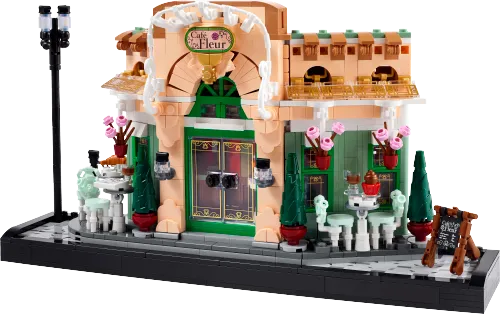
- Batman: The Classic TV Series Batmobile (76328), French Café (10362), Kingfisher Bird (10331), Bumblebee (10338) — the mid-range band of Icons that tends to be the “safe” anniversary or Christmas gift.
Nobody should panic-buy — some of these will still be found for a few more weeks — but if one of these was “this year’s big gift” for someone in your home, the decision can no longer be put off until November. It will not be there.
The 31 December wave: the one that defines the Epiphany season
The 351 sets retiring at the end of the year are the heart of the Christmas problem, because their timeline clashes head-on with the Spanish shopping calendar: the official date in theory lets them reach Epiphany, but Christmas demand eats the stock just when the most people are looking for them. It is the perfect storm — last production run, zero restocking and the yearly peak in demand, all in the same month.
The full, always up-to-date list is in sets retiring, sorted by urgency. Our practical advice for that wave, in three steps: make the household wish list in October, look up each set on its page (the retirement date appears next to the official price and the Amazon price), and buy everything retiring on 31 December with Black Friday as the deadline — not for the discount, but because afterwards availability is a coin toss. If a verified discount comes along as well, all the better; in deals we only list the ones that truly beat the official price.
”Can’t I just buy it discounted in January?”
With retired sets, no. January sales work with products that are still in the range; a retired set does not drop in price in January — it goes up, because it moves to the resale market. The conceptual mistake comes from treating LEGO like seasonal clothing, and it costs dearly: the typical jump for a popular, newly retired set in third-party hands is 30-80% over the official price, and from there it only grows. We go into it more calmly in the guide on which retiring sets to put first, but the short version is: with retirements, waiting never makes things cheaper.
Mind you, this does not mean a retired set is an “investment” either — we save that word for another, more doubtful conversation. It means exactly what it says: that if you want it to give or to build, the best price you will see is the one before the retirement.
The buyer’s calendar, in brief
So you do not get lost, this is how the year looks for someone giving LEGO with the retirements in front of them:
- July: real last call for the 31-Jul wave. The items on the list above, now or on the resale market.
- August-October: the quiet months. Wish list done, pages checked, zero rush with anything that has no close retirement.
- November: ideal buying window for everything in the 31-Dec wave, with Black Friday as both excuse and deadline.
- 1-15 December: last reasonable window with stock and comfortable shipping.
- 26 December - 5 January: territory of scattered restocks and markups. At this point you only buy what has no retirement date looming — and always checking the page so you do not pay above the official price.
We have the seasonal version of this calendar, with the live deals for each moment, on the permanent Epiphany page and on the Christmas one. And if what worries you is not stock but choosing the right set, start instead with the pieces-per-euro ranking by budget — every set in that guide survives Epiphany, precisely so you can choose without a clock ticking.